

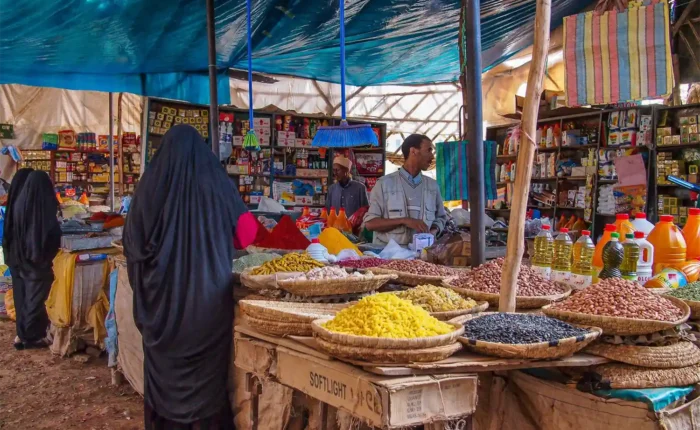
A souk is a traditional Moroccan and North African marketplace — a web of narrow lanes and covered passages where merchants sell spices, textiles, leather, lanterns, carpets and food, and where neighbours meet as much as they shop. The word comes from the Arabic sūq (سوق), meaning simply “market.”
Happy Morocco Travel is an Amazigh-owned tour company, and we grew up in Rissani — the old caravan town on the edge of the Sahara whose souk has pulled desert traders in for more than a thousand years. So when travellers ask us what a souk really is, we don’t reach for a dictionary. We think of the smell of dates and cumin, the donkeys tied up at the entrance, and our grandfathers’ voices rising and falling over the price of a sack of barley.
This is the guide we’d give a friend before their first market day: what a souk is, where the word comes from, what makes the Moroccan souk its own thing, and how to walk into one and feel at home.
Souk Meaning at a Glance
- The word: from Arabic sūq (سوق), “market” or “marketplace”
- What it is: a traditional market of narrow, often covered lanes, grouped by trade
- Where you’ll find one: across Morocco, North Africa and the Middle East
- Two kinds in Morocco: permanent city souks (Marrakech, Fes) and weekly countryside souks, like our own in Rissani
- More than shopping: the social, cultural and economic heart of the town
What Does Souk Mean in English?
In English, souk is usually translated as “market” or “marketplace,” which is exactly where the word comes from: Arabic sūq (سوق). But the plain translation misses what locals actually hear in it.
In Moroccan Darija we use the word two ways. There’s the souk that’s always there — the covered market quarter of a city like Marrakech or Fes. And there’s the souk: the weekly market day, when farmers, herders and craftspeople pour into town to trade. In Rissani the big souk falls on Sundays, Tuesdays and Thursdays, and the whole town changes shape around it. One word, two living meanings.
If you want the stall-by-stall shopping version, our complete guide to exploring a Moroccan souk walks you through Marrakech and Fes in detail. This page stays on the bigger question: what a souk is, and why it matters.
The History Behind Morocco’s Souks
Souks are old. They grew up along the caravan routes that crossed the Sahara, linking the gold and salt of West Africa with the cities of the north and the markets beyond. Wherever the caravans stopped, a market formed; wherever a market lasted, a town grew around it.
Rissani is a good example, because we live it. Our town sits on the ruins of Sijilmassa, a medieval trading city that from around the 8th century was one of the great gateways of the trans-Saharan gold trade. The caravans are long gone, but our weekly souk is their direct descendant — the same crossroads in the sand, still trading after more than a thousand years.
How the Souk Marketplace Evolved
Across Morocco the same pattern repeated and matured:
- Early markets: open-air meeting points where nomadic and farming families traded
- Medieval medinas: permanent covered streets organised by trade — a lane for the dyers, a lane for the coppersmiths
- Imperial cities: grand souks beside the mosques and madrasas, at the very centre of city life
- Today: living markets that still trade the old way while adapting to a world of card readers and cameras
The Moroccan Souk Up Close
Every country gives the souk its own flavour, and the Moroccan souk is unmistakable. Two shapes are worth knowing before you go.
City Souks: Marrakech & Fes
- Maze-like lanes: narrow alleys that turn shopping into an adventure — getting a little lost is part of it
- Grouped by trade: whole streets for carpets, leather, spices, lanterns or metalwork, a habit that goes back centuries
- Craft on display: in Fes you can watch tanners and dyers work the way their families have for generations
- Bargaining expected: on crafts and souvenirs, a price is the start of a conversation, not the end of one
Country Souks: Market Day in the Desert
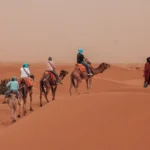
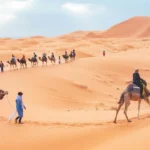
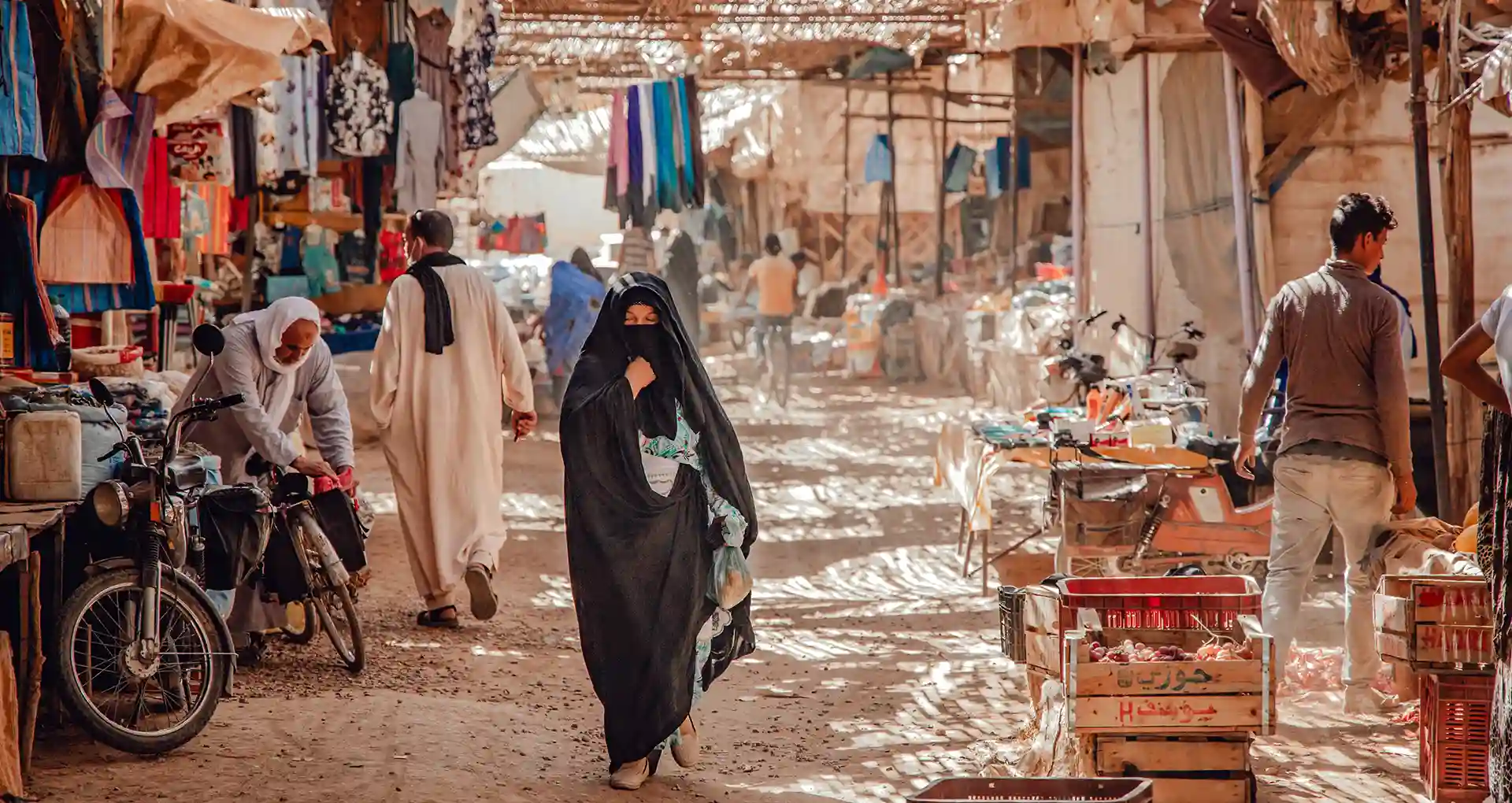
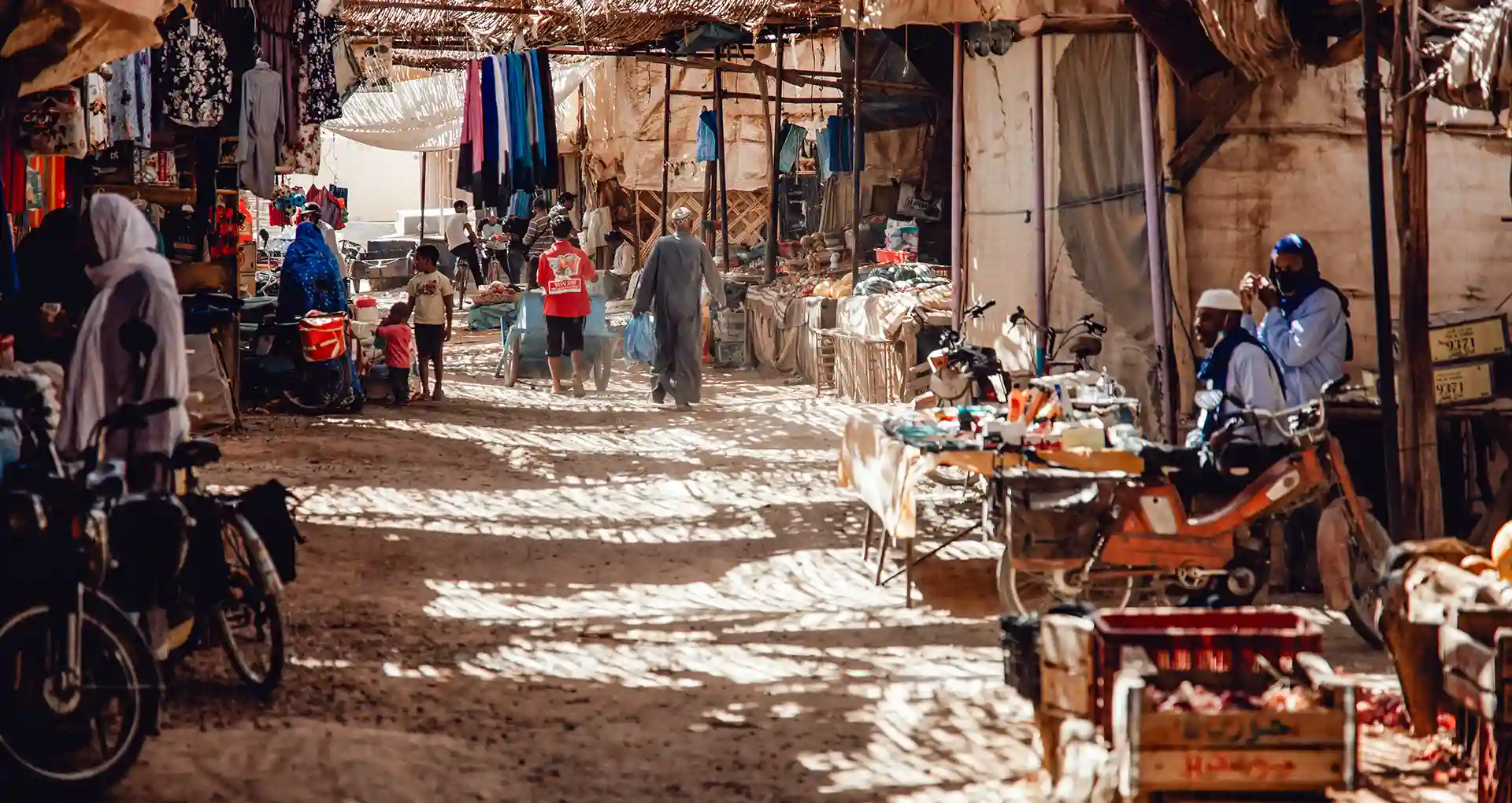
This is the souk we grew up in. On market mornings in Rissani the roads fill with pickup trucks, mopeds and whole families, and there’s a patch of ground everyone still calls the donkey parking, where the animals wait in rows while their owners trade. You’ll find the date souk piled with Medjool and khalt dates from the surrounding oases, sacks of cumin and dried roses, secondhand tools, sheep and goats, and Amazigh (Berber) traders who’ve driven in from the edge of the dunes near Merzouga. It’s dustier and less polished than Marrakech — and, to us, the realest souk in Morocco. If you’re heading our way, it pairs naturally with our Merzouga desert camel treks.
Souks, Bazaars and Medinas: What’s the Difference?
Three words travellers mix up — here’s how we use them:
- Souk: the market itself — the lanes and stalls. The word travels across Morocco, North Africa and the Gulf.
- Medina: the old walled city. The souk is the market inside the medina — so Marrakech’s souks sit within Marrakech’s medina.
- Bazaar: the same idea as a souk, but the Persian/Turkish word. Istanbul’s Grand Bazaar and Iran’s covered bazaars are cousins of the Moroccan souk.
So a Turkish bazaar tends to be one vast covered complex; a Persian bazaar is famous for its vaulted ceilings and carpets; Cairo’s Khan el-Khalili leans to gold and antiques. Different names and details, one shared ancestor: the trading street at the heart of the old city.
What to Expect on Your First Souk Visit
A Feast for the Senses
A souk hits you all at once: pyramids of saffron, paprika and cumin; the bang of a coppersmith’s hammer; cedar shavings, fresh mint and grilling meat; the cool of a carpet against your hand; and somewhere, always, a glass of sweet mint tea being poured from a height. Don’t try to see it all. Pick a lane and follow your nose.
Finding Your Way
City souks grew organically, so the map in your hand will only get you so far. Vendors of the same trade cluster together, wider lanes link the main quarters, and the quiet side alleys often hide the most honest workshops. Getting briefly lost is normal — it’s how everyone, locals included, learns a medina.
Bargaining, the Moroccan Way
Haggling worries a lot of first-timers, so let me take the fear out of it. In Morocco it isn’t a fight — it’s a friendly back-and-forth, often over tea. Ask the price, offer a bit below what you’d happily pay, and let it meet in the middle. Smile, stay relaxed, and if the number never feels right, a warm “thank you” and a step away is a perfectly polite end. Food, dates and everyday goods usually have set prices; crafts and souvenirs are where the conversation happens.
Tips for Your First Moroccan Souk
- Go in the morning: light is better, crowds are thinner, and traders are fresh. For a country souk, check which days it runs before you travel.
- Carry small cash: most stalls are cash-only, and small notes make bargaining smoother.
- Dress modestly: covered shoulders and knees show respect and draw less attention.
- Ask before you photograph: a quick smile and a nod first — most people are happy to say yes, some would rather not.
- Learn two words: salam (hello) and shukran (thank you) open every door.
- Take your time: the souk rewards the unhurried. A new medina can feel overwhelming — our first-timer’s guide to Morocco helps you plan the rest of the trip around it.
A Few Souks Worth the Trip
- Marrakech, Morocco: the most famous of all — over a thousand stalls of carpets, leather, lamps and spices spilling out from Jemaa el-Fnaa. Start with our Marrakech tours.
- Fes, Morocco: the oldest medina in the country, home to the medieval tanneries and the deepest craft traditions.
- Rissani, Morocco: our home souk — a real desert market day on the site of ancient Sijilmassa, far from the tourist trail.
- Grand Bazaar, Istanbul: one of the world’s largest covered markets, with thousands of shops under Ottoman arches.
- Khan el-Khalili, Cairo: a 14th-century market famous for gold, antiques and coffee houses.
- Mutrah Souk, Muscat: a quieter, traditional Omani market known for frankincense and silver, set by the harbour.
Frequently Asked Questions About Souks
What is a souk?
A souk is a traditional marketplace in Morocco, North Africa and the Middle East — usually a network of narrow, often covered lanes where merchants sell spices, textiles, leather, crafts and food. It is also a social and cultural hub, not just a place to shop.
What does souk mean in English?
Souk translates as “market” or “marketplace.” It comes from the Arabic word sūq (سوق). In everyday Moroccan use it can mean both a permanent market quarter and a weekly market day.
What is the difference between a souk and a medina?
A medina is the old walled city; a souk is the market within it. When you shop the souks of Marrakech or Fes, you are inside that city’s medina.
Is a souk the same as a bazaar?
They mean the same thing in different languages. “Souk” is the Arabic word used across Morocco, North Africa and the Gulf; “bazaar” is the Persian and Turkish word for the same kind of market, like Istanbul’s Grand Bazaar.
Do you have to haggle in a Moroccan souk?
For crafts and souvenirs, yes — bargaining is expected and friendly. Offer a little below what you’d happily pay and meet in the middle. Food, dates and everyday goods usually have fixed prices.
What can you buy in a Moroccan souk?
Spices, dates, carpets and rugs, leather babouche slippers and bags, lanterns and metalwork, ceramics, argan oil, and traditional clothing — much of it handmade by local artisans.
When is the Rissani souk?
Rissani holds its main souk three days a week — Sundays, Tuesdays and Thursdays — when traders from the surrounding oases and the desert near Merzouga come to town. Mornings are the best time to go.
Come Walk the Souk With Us
So, what is a souk? It’s a marketplace, yes — but really it’s the living heart of a Moroccan town, where commerce, craft and friendship have been tied together for over a thousand years. The best way to understand one is to stand in it: to smell the spices, hear the haggling, and share the first glass of tea.
No hard sell here. If you’re coming to Morocco and want to see a souk the way we know it — past the postcard stalls and into the lanes where people actually shop — that’s exactly the kind of day we love to plan. Browse our Morocco tours, or just send us a message when you’re ready. The first glass of mint tea is on us.
If you want the market itself rather than a glimpse of it, our 2-day tour timed for market day leaves Errachidia on Saturdays, Mondays and Wednesdays so Rissani always falls on a souk morning — Sunday, Tuesday or Thursday.
— Happy Morocco Travel · Amazigh-owned tour operator in RissaniStill working this trip out?
We are a family who run tours out of Rissani, on the edge of Erg Chebbi. Ask us anything about what you have just read — dates, driving times, whether an itinerary is actually realistic. You will get a straight answer from us, not a sales call.