

Your Complete Guide to Exploring a Moroccan Souk
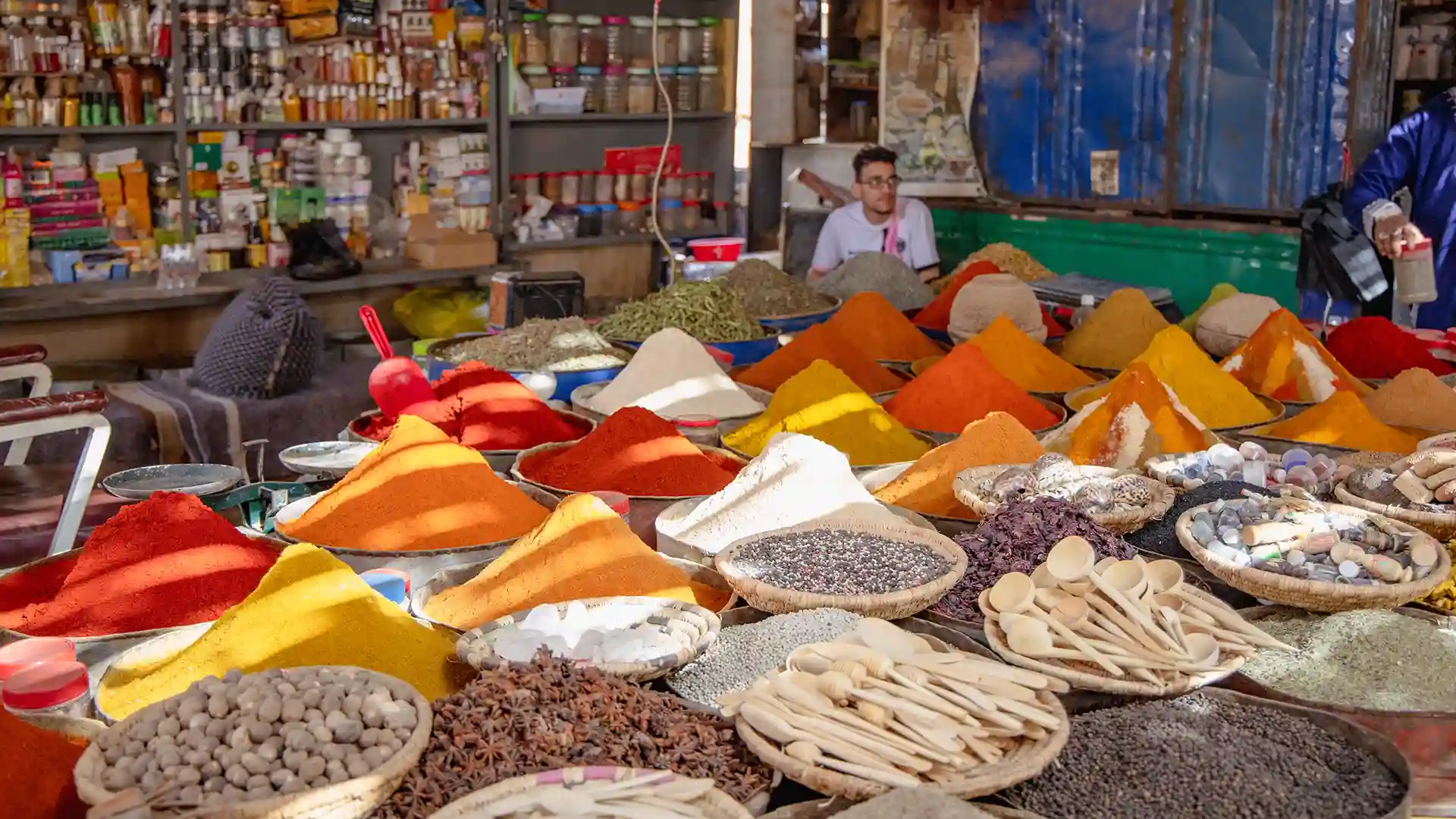
Table of Contents
We run Happy Morocco Travel, an Amazigh-owned Moroccan tour company, and between us we have walked guests through just about every Moroccan souk worth knowing — from the carpet lanes of Marrakech to the tanneries of Fez and our own desert market in Rissani. A souk is a traditional marketplace tucked inside Morocco’s old walled medinas, where local artisans still sell what they make by hand: spices, Berber rugs, leather, lanterns and argan oil.
This is the guide we give our travellers before their first market day — where to go, what to buy, how to bargain without stress, and how to find your way back out. New to the whole idea? Start with what a souk actually is, then come back here for the shopping.
What is a Moroccan Souk?
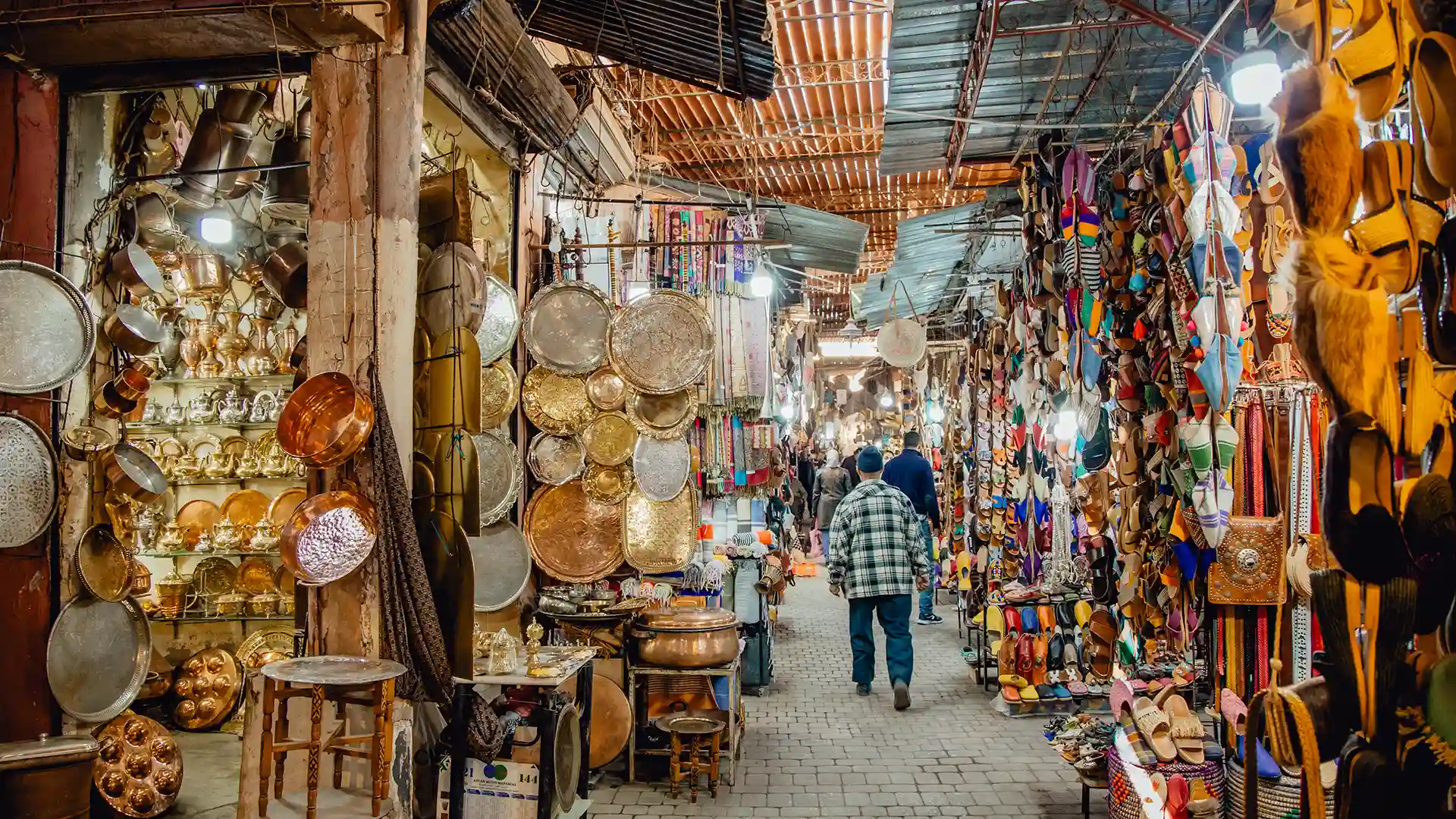
A Moroccan souk is a traditional marketplace, usually set inside the ancient medinas (walled old towns) of cities like Marrakech, Fez, Rissani and Essaouira. Dating back to around the 11th century, these markets began as gathering spots for merchants outside the city walls and grew into the commercial and social heart of the city. They are organised by specialty, with similar shops clustered together — spice vendors in one lane, leather craftsmen in another — a habit that goes back to the old guild system. Expect a chaotic but welcoming atmosphere: the aroma of cumin and turmeric mingling with the ring of a coppersmith’s hammer, and narrow alleys shared by locals, travellers, donkeys and motorbikes. Souks are not tourist traps; they are part of daily Moroccan life, where stories are traded as freely as goods.
The Best Souks to Visit in Morocco
Morocco has some of the world’s most famous souks, and each one has its own character. Here are the ones we send travellers to:
- Marrakech souks: the crown jewel, sprawling north of Jemaa el-Fna in the UNESCO-listed medina — a maze of over 3,000 stalls, with areas like Souk Semmarine for textiles and pottery and Souk El Attarine for spices and perfumes. Open, energetic and perfect for first-timers, though be ready for the crowds. Most of our Marrakech tours start right here.
- Fez souks: deeper and more old-world, with thousands of alleys hiding treasures like Souk el Attarine under cedar ceilings. Don’t miss the Chaouara Tannery for leather — go early, when the smell is gentler. Fez is the place for higher-end pottery in green and blue.
- Essaouira souks: a coastal, relaxed twist in this 18th-century seaport. Head to the fish market for sardines grilled on the spot, or browse artisan goods in a calmer setting.
- Rissani souk: our home market, on the edge of the Sahara and the site of ancient Sijilmassa. It runs Sundays, Tuesdays and Thursdays, with dates, livestock and Amazigh traders from the desert — the real thing, far from the tourist trail. It pairs perfectly with our Sahara Desert tours.
What to Buy in a Moroccan Souk
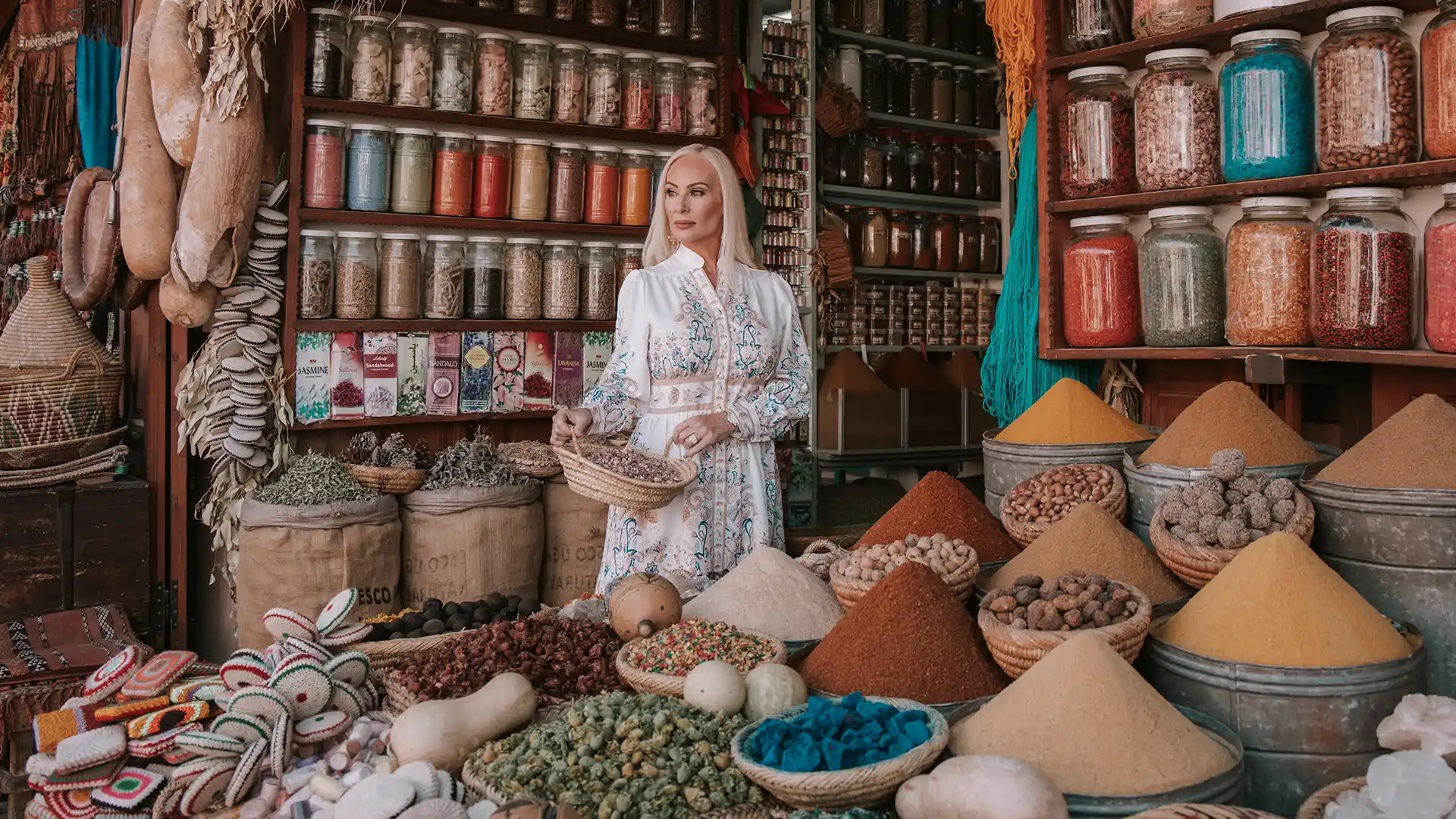
Shopping a Moroccan souk is treasure hunting. Look for authentic, handmade pieces that carry real Moroccan craft:
- Spices and argan oil: saffron from Taliouine, cumin, paprika, and pure argan oil — Morocco’s “liquid gold” for cooking and skincare.
- Leather goods: babouche slippers from Souk Smata, bags and jackets from Souk Cherratine — Moroccan leather is known worldwide for its hand processing.
- Rugs and textiles: Berber rugs in Souk Zrabi tell stories through their patterns — each region weaves its own.
- Pottery and ceramics: hand-painted tagine pots from Fez, often in vivid blues and greens.
- Other gems: woodwork from Souk Chouari, instruments from Souk Kimakhine, jewellery from Souk des Bijoutiers. Buy straight from the artisan when you can — it supports the craft and usually means a fairer price.
One honest tip: real argan oil is never cheap, and a genuine rug always comes with a story. If a deal seems too good, it probably is.
Mastering the Art of Bargaining in a Moroccan Souk
Haggling worries a lot of first-timers, so let me take the fear out of it. In a Moroccan souk it is a friendly ritual, not a fight. Start with a smile and “Salam alaykum,” then compliment the piece. Opening prices often run two to three times fair value, so counter around 40–50% and meet in the middle. Carry small dirham notes, don’t show too much excitement, and if the number never feels right, a warm “thank you” and a step away is perfectly polite — the vendor will often call you back. Over a rug, accept the mint tea; it slows everything down, which is exactly the point.
Navigating the Maze: Tips for Getting Around
Getting lost in a souk is part of the adventure — everyone does, locals included. Use landmarks like the Koutoubia Mosque or Jemaa el-Fna as anchors, download an offline map, and wear comfortable shoes for the uneven lanes. Listen for “balak!” — that means a cart or mule is coming through. Mornings (9–11am) are best for thinner crowds and good light, souks open later on Fridays after midday prayers, and cash is king since ATMs are scarce inside. First trip to Morocco? Our first-timer’s guide to Morocco covers the rest of the practicalities.
Cultural Etiquette and Safety in the Moroccan Souk
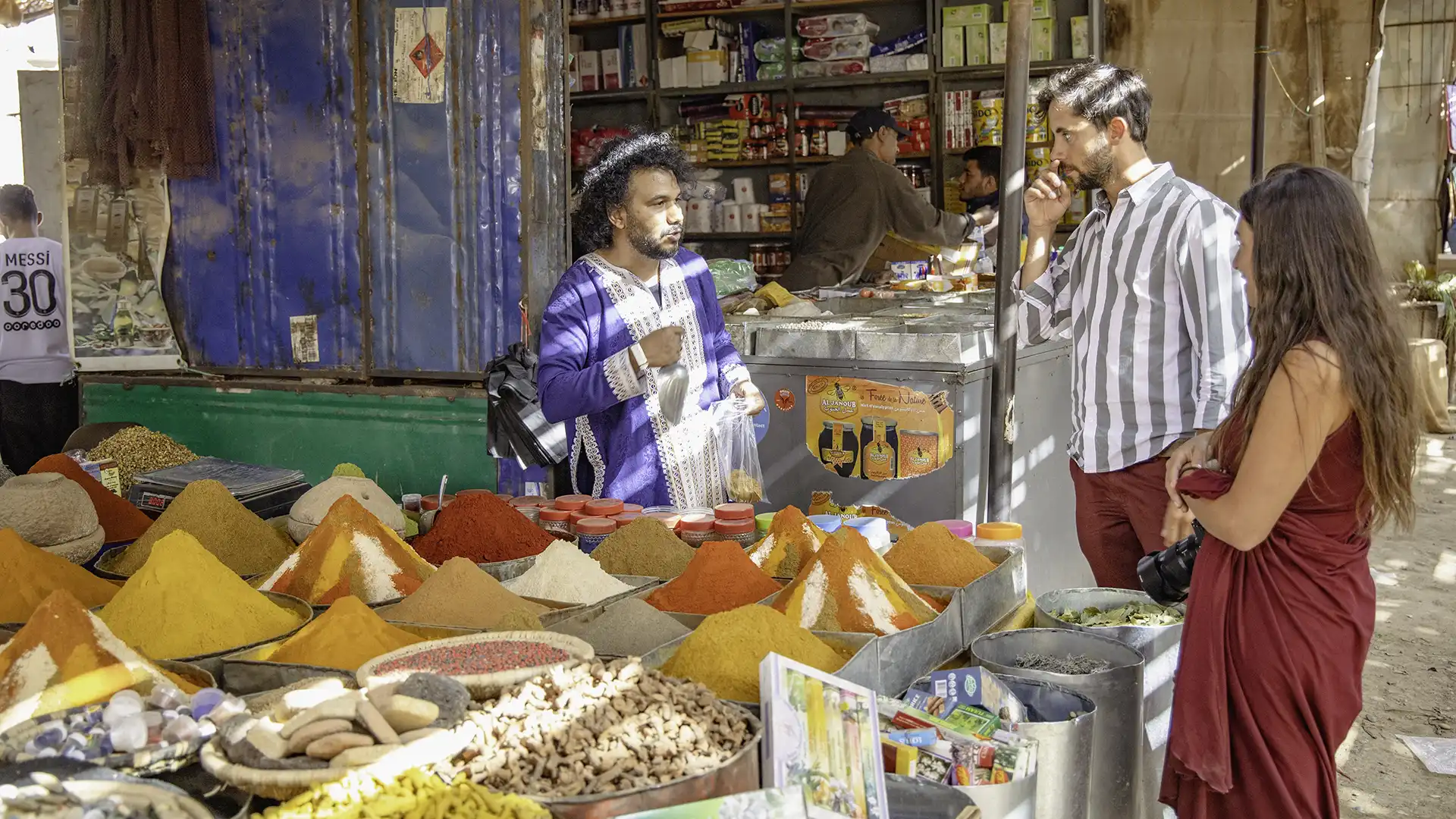
Respect goes a long way. Dress modestly (shoulders and knees covered), ask before photographing people, and a polite “La, shukran” (no, thank you) handles persistent sellers. For safety, keep valuables secure against pickpockets, stick to the busy lanes after dark, and split your cash between pockets. Souks are generally very welcoming, and many of our travellers from the US visit with zero trouble — if you’d like the fuller picture, we wrote an honest take on whether Morocco is safe to visit. During Ramadan and Eid expect a festive mood, special sweets and busier evenings.
Hidden Gems and Local Secrets
Step off the main path for the best finds. In Marrakech, the small workshops near Souk Semmarine sell artisan pieces without the front-row markup. In Fez, older women sell hand-embroidered linens from their homes at fair prices — ask a local to point the way. Music lovers should wander Souk Kimakhine, where instrument makers sometimes break into a jam session. These quieter corners are where you actually meet people, not just buy from them.
Visit the Souks With Us: Morocco Tours
Most of our travellers fly in from the US, Canada and the UK, and the souks are almost always a highlight — but they are far easier, and a lot more fun, with someone local beside you. On every Happy Morocco Travel trip you get a private English-speaking driver-guide, hand-picked riads, and airport pickup, so you can wander the markets without worrying about getting lost or overpaying. Here is where most people start:
- Marrakech tours — the classic first taste of Morocco, souks and Jemaa el-Fna included.
- Sahara Desert tours — pair the markets with a night under the stars in the dunes near our home in Merzouga.
- Private, tailor-made Morocco tours — tell us your dates and your wish list, and we build the route around you.
- See all Morocco tours — browse every itinerary in one place.
Not sure where to start? Send us a message with your dates and what you’d love to see, and we’ll sketch out an itinerary — no pressure, no hard sell. The first glass of mint tea is on us.
Moroccan Souk FAQ
What is a Moroccan souk?
A Moroccan souk is a traditional marketplace inside a city’s old medina, where artisans and traders sell spices, rugs, leather, ceramics and more. It is organised by trade and serves as a social and economic hub, not just a shopping area.
Which is the best souk in Morocco?
For first-timers, Marrakech is the most spectacular and easiest to reach. Fez is the most authentic and best for craftsmanship. For a real local market away from tourists, the Rissani souk on the edge of the Sahara is hard to beat.
How do you bargain in a Moroccan souk?
Greet the vendor, ask the price, then counter at roughly 40–50% and settle in the middle. Stay friendly, carry small notes, and feel free to walk away politely if it doesn’t feel right. Crafts and souvenirs are negotiable; food and dates usually are not.
What should I buy in a Moroccan souk?
The classics are argan oil, spices and saffron, Berber rugs, leather babouche and bags, hand-painted ceramics and lanterns. Buying directly from the artisan gets you better quality and a fairer price.
Are Moroccan souks safe for tourists?
Yes. Souks are busy, lively and generally very safe. Use normal big-city sense — watch for pickpockets in crowds, keep valuables secure, and stick to busier lanes at night. Plenty of our US travellers explore them solo without any trouble.
Can I visit a souk with a local guide?
Absolutely — it is the easiest way to skip the getting-lost and the tourist markups. Our Morocco tours include private English-speaking guides who take you to trusted artisans in Marrakech, Fez and beyond.
— Happy Morocco Travel · Amazigh-owned tour operator in Rissani
Still working this trip out?
We are a family who run tours out of Rissani, on the edge of Erg Chebbi. Ask us anything about what you have just read — dates, driving times, whether an itinerary is actually realistic. You will get a straight answer from us, not a sales call.