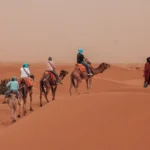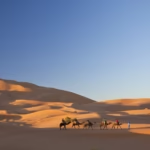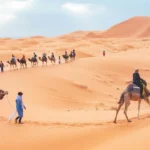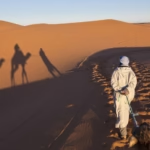


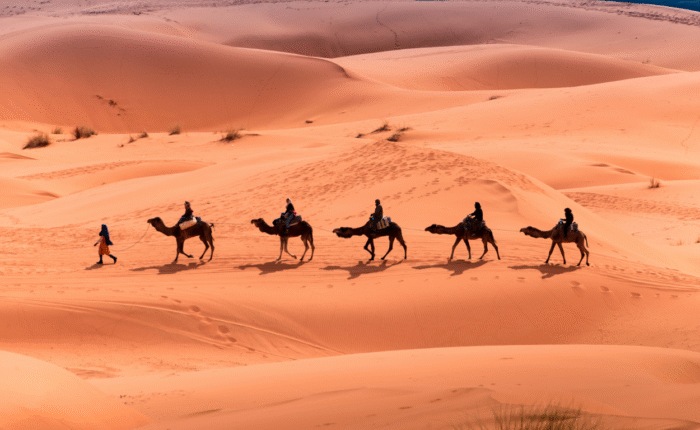
A Merzouga camel trek is a short guided ride — about 90 minutes — over the dunes of Erg Chebbi to watch the sun rise or set over the Sahara. Sunrise treks leave around 5am; sunset treks leave in the late afternoon, roughly 5pm. Both start and finish at your auberge on the edge of the sand.
We grew up in Rissani, forty minutes from these dunes. We have watched the sun come up over Erg Chebbi more times than we can count, and we still stop what we are doing to look. So here is how the treks actually work, when to come, and the small things that make the difference — from two people who live next door to them.
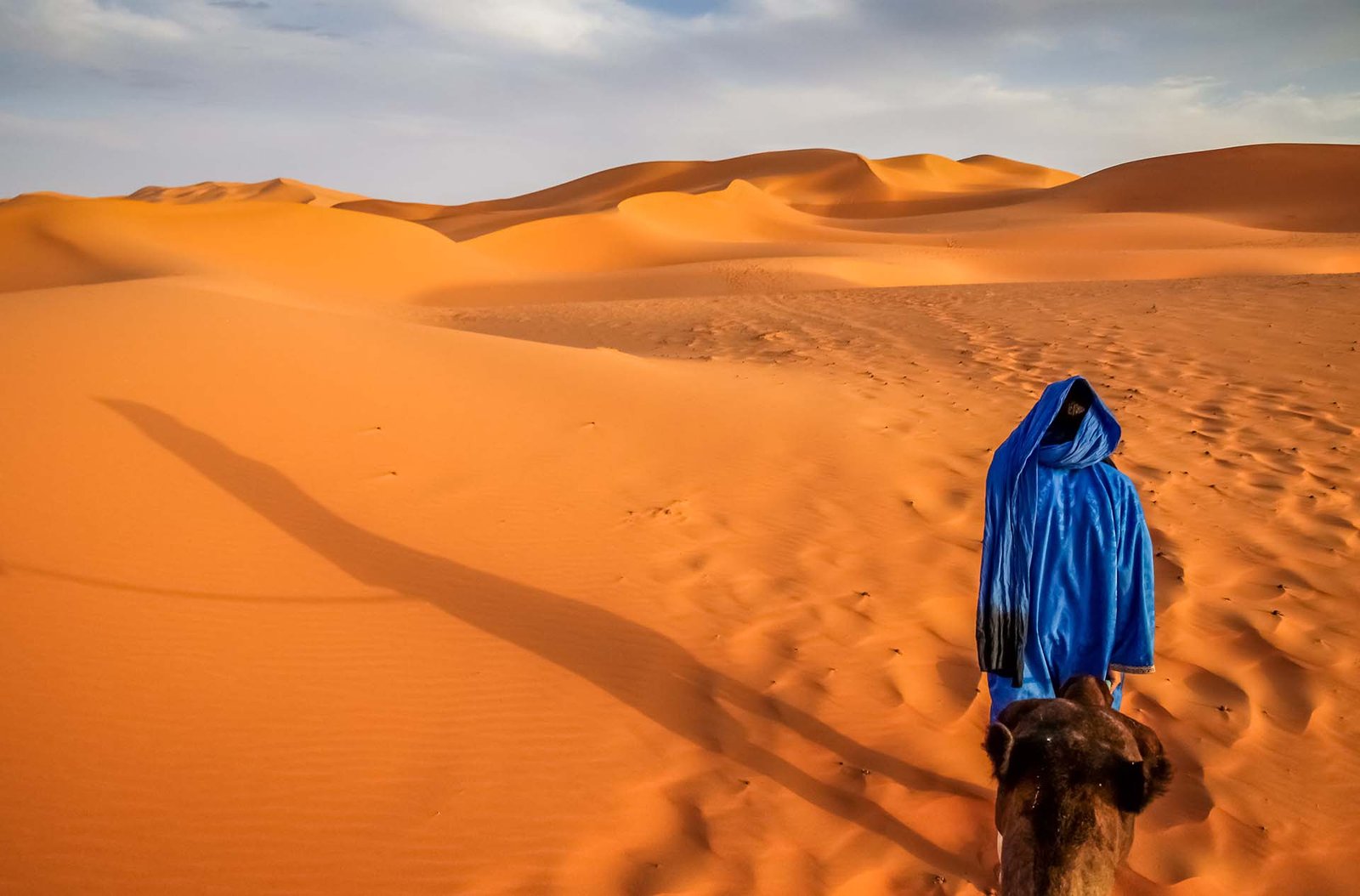
Sunrise camel trek (about 90 minutes)
You leave in the dark. It is cold before dawn in the desert — genuinely cold from November to February, so bring a layer even if the afternoon was hot. Your guide walks the camels out along the sand while the sky is still grey, and picks a dune with a clean view east. You do not have to climb the tallest one; a good ridge is enough, and the guide knows which.
Then you wait, and the light does the work. The sand shifts from grey to mauve to the deep reddish-orange Erg Chebbi is known for, and for a few minutes the only sound is the wind. That is the part people remember. You are back at the auberge in time for breakfast.
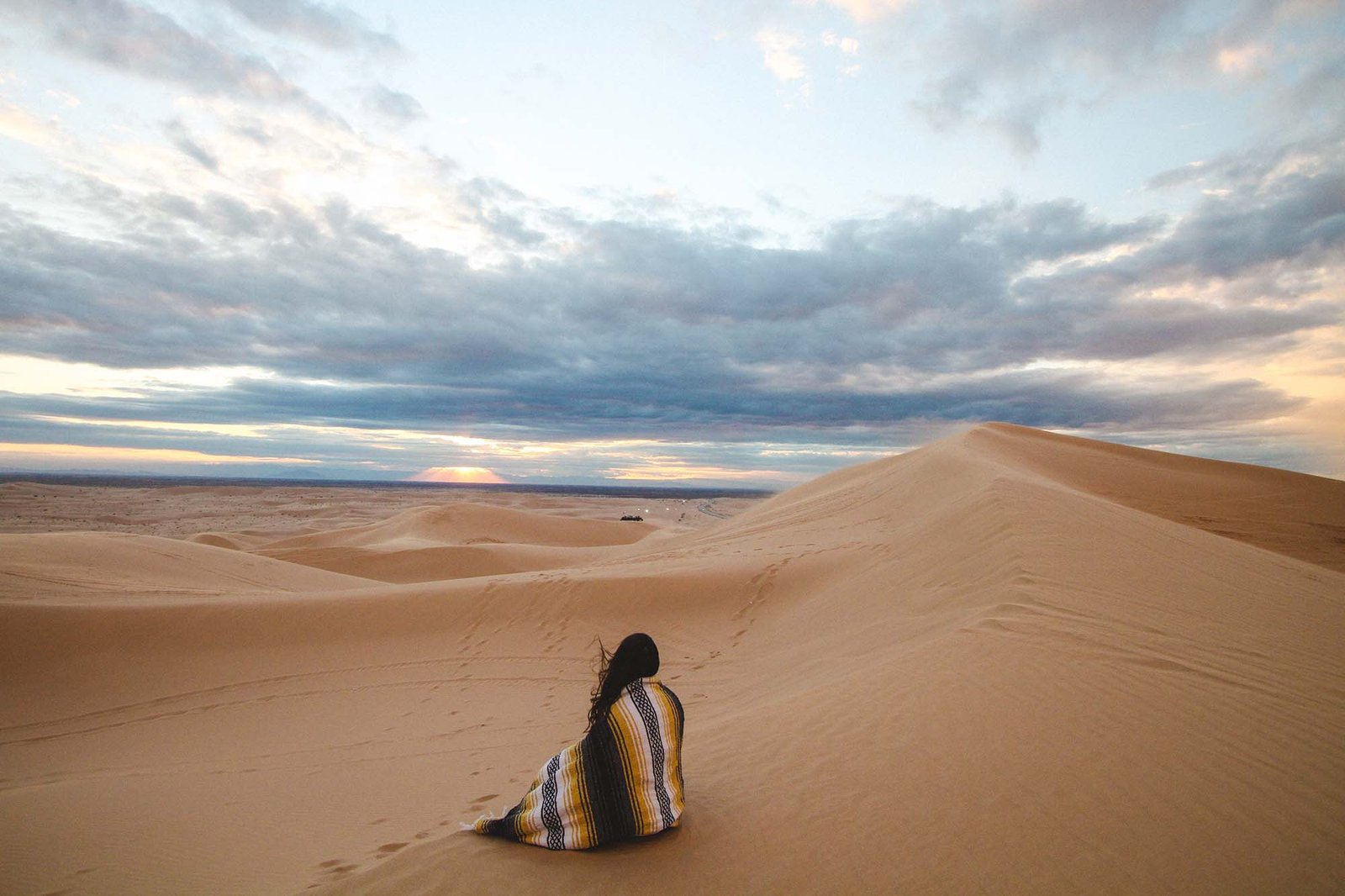
Sunset camel trek (about 90 minutes)
The sunset ride is the easier one if you are not a morning person. You set out in the late afternoon when the heat has dropped, ride into the dunes, and climb up to watch the sun go down. The colours are warmer — reds and oranges and a short band of purple — and the whole thing feels less rushed because you are not fighting the alarm clock.
It is also the busier slot: most camps run their trek at sunset, so you will see other small caravans on the sand. It is still quiet by any normal standard, just not empty the way sunrise is.
Sunrise or sunset — which should you choose?
Honestly? If you can, do both, and the neatest way is a night in a desert camp: ride in at sunset, sleep out on the sand, ride back at sunrise. You get the warm light and the empty light, and a night under a sky with no towns for miles.
If you only pick one: choose sunrise for solitude and the cleanest colours, sunset for warmth and ease. There is no wrong answer — we have never had a guest come back disappointed by either.
When to come
Spring (March–May) and autumn (September–November) are the kind months: warm days, bearable nights. Summer is brutal — midday can pass 45°C, so treks run only at the very edges of the day. Winter days are lovely and clear but the nights are cold, which matters if you are camping. We go through it season by season in our guide to the best time to visit Morocco.
What to bring
- A warm layer — non-negotiable for sunrise, and for any night in the desert.
- A scarf for sun and blown sand; your guide can show you how to wrap it.
- Closed shoes and sunglasses.
- Water, sunscreen, and a camera or phone — the light is worth a real photo.
How to do this with us
Every one of our desert routes ends here, on the Erg Chebbi dunes we grew up beside. The 3-day Marrakech to Merzouga tour is the classic way in, with a sunset trek and a night in camp. The 4-day desert tour adds a second Sahara night so you get sunset and sunrise without rushing. Not sure which dunes, which camp, or which month? First read where the Sahara actually is and how to reach it, then just ask us — you will get an answer from the family that owns the company.
Still working out how the whole desert trip fits together — routes, driving times, how many days to allow? Start with our complete guide on how to visit the Sahara Desert in Morocco. And if you are curious what moves out there after dark, we wrote honestly about the animals of the Sahara.
Frequently asked questions
How long does a Merzouga camel trek last?
About 90 minutes in total, including the ride out and back. Sunrise treks leave around 5am; sunset treks leave in the late afternoon, roughly 5pm.
Sunrise or sunset — which is better?
Sunrise is colder but emptier, with the cleanest light. Sunset is warmer and easier but busier. If you overnight in a desert camp you can do both: ride in at sunset, ride out at sunrise.
What is the best time of year for the desert?
Spring (March to May) and autumn (September to November) are ideal. Summer is extremely hot and treks run only at dawn and dusk; winter days are clear but nights are cold.
Do I need any experience to ride a camel?
None. Your guide helps you mount and dismount and leads the camel the whole way. The animals are calm and used to riders.
What should I bring?
A warm layer, a scarf for sun and sand, closed shoes, sunglasses, water, sunscreen and a camera. Warm clothing is essential for sunrise and for camping.
Are the treks suitable for children?
Yes. Younger children can ride with a parent. Tell us their ages when you book and we will set the pace accordingly.
Any other question, write to us — and when you get here, the first glass of mint tea is on us.
Still working this trip out?
We are a family who run tours out of Rissani, on the edge of Erg Chebbi. Ask us anything about what you have just read — dates, driving times, whether an itinerary is actually realistic. You will get a straight answer from us, not a sales call.