

Is Morocco Still a Dream Destination? Safety, Scams & What to Expect
Table of Contents
Yes — Morocco is safe to visit. Millions of travellers come every year, violent crime against tourists is rare, and the real annoyances — pushy touts, taxi overcharging, souk hustles — are predictable and easy to avoid once you know how they work.
Happy Morocco Travel is an Amazigh family company, and we were born and raised here — Rissani, on the edge of the Sahara. We’ve walked thousands of guests from the US, Australia and Europe through the same medinas the scare-stories are written about. So instead of another generic safety article, here’s the honest local picture: what’s actually risky, what’s just noise, and the exact habits that keep a trip smooth.
Is Morocco Safe to Visit Now?
Most government advisories — including the US State Department — place Morocco at Level 2, “exercise increased caution.” That’s the same tier as France, Spain, Italy and the UK. In practice, for the routes tourists actually travel:
- Violent crime against tourists is rare in the main travel areas.
- The real, common problems are petty theft in crowds, overcharging, and pushy selling in the most touristy spots.
- Police are visible around tourist zones in every major city, and tourism police take complaints seriously — Morocco protects its tourism reputation hard.
Where to pay a bit more attention: packed medina lanes (pickpockets like crowds everywhere in the world), and remote mountain or deep-desert routes — not because they’re dangerous, but because you want a driver who knows the roads and the weather. That’s true of our own region too: the far south is welcoming and beautiful, and it’s best travelled with a registered local operator who knows it.
The classic circuit — Casablanca, Rabat, Chefchaouen, Fes, the Sahara at Merzouga, the Atlas, Marrakech, Essaouira — is well-trodden, well-policed and genuinely safe with ordinary common sense.
What About the 2023 Earthquake and Recent Events?
The September 2023 earthquake hit parts of the High Atlas and some historic corners of Marrakech. It was a hard moment — many of us have friends and family in those valleys. But the recovery was fast and real: the key sites reopened within months, riads and hotels were repaired and often reinforced, and tourism numbers didn’t just recover — they set records in 2024 and 2025.
Visiting Marrakech and the Atlas today, you’ll see restoration work in a few historic spots, and that’s it. Roads to the mountain villages are open in normal weather. And your visit puts money directly into the valleys that needed it most — the guides, muleteers and guesthouse families of the High Atlas.
The Most Common Complaints – And How to Avoid Them
Nearly every negative Morocco story comes down to the same four situations. We see them from the other side — here’s how they work and how to step around them.
1. Pushy Touts and “Guides” in the Medina
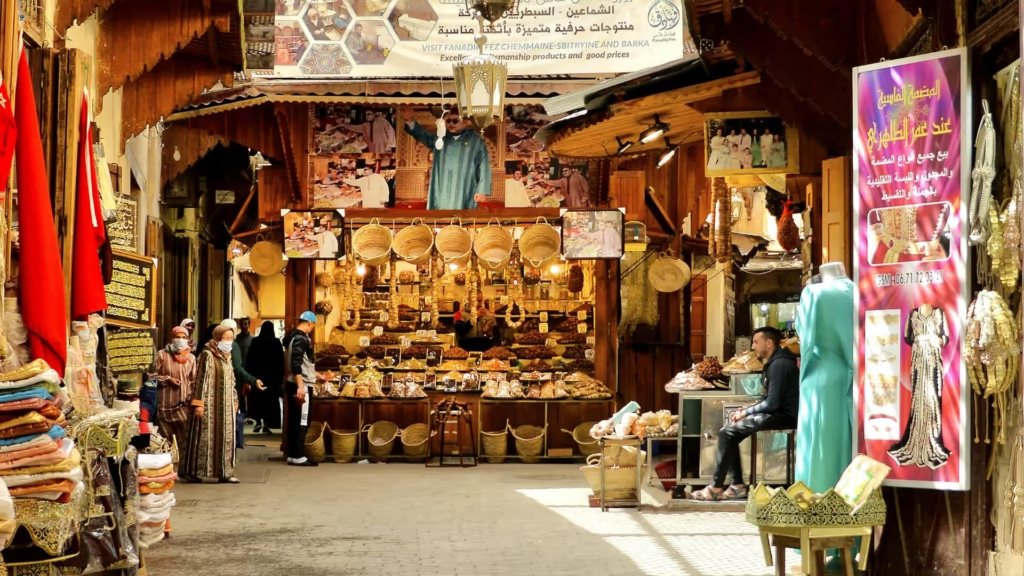
In Marrakech and Fes especially, someone may offer to “show you the way,” insist a square is “closed,” or steer you toward a cousin’s shop. It’s an income strategy, not a threat.
- Use only licensed guides — they carry a government badge — booked through your riad or agency.
- A firm, smiling “la, shukran” (no, thank you) while you keep walking ends 95% of approaches.
- Lost? Step into a shop or café and ask — a person standing still gets honest directions; a person being followed gets steered.
2. Taxi Overcharging
- Insist on the meter in petit taxis. If the driver refuses, step out — the next one will run it.
- No meter (or an intercity grand taxi)? Agree the fare before you get in.
- Careem works in the big cities; in Marrakech, Heetch and Roby give app-transparent prices.
- Ask your riad what a route should cost — then you know the fair number before you negotiate.
3. “Free Gifts” and Surprise Charges
The henna hand grab on Jemaa el-Fnaa, the “gift” bracelet, the unordered olives that appear on the restaurant bill. The counter is simple: don’t accept unrequested items, ask “included or extra?” before touching anything on the table, and if a charge appears that you didn’t agree to, point it out calmly — it usually vanishes with a shrug and a smile.
4. Fake or Low-Quality Products
Real argan oil is never cheap — the fruit takes hours of hand-cracking per litre. Buy oil and saffron from cooperatives your riad or guide vouches for. For rugs and leather, take your time, compare shops, and remember bargaining is a friendly game: the moment it stops being fun, smile, thank them and walk. We wrote the full playbook in our souk shopping guide.
Women Traveling in Morocco
Women travel through Morocco every day — solo, with friends, with kids — and most trips go beautifully. The honest caveat: unwanted attention and comments do happen, more in the big-city medinas than anywhere else. What experienced travellers (and our own female guests) do:
- Dress roughly to local norms — no need to cover your hair; covering shoulders and knees reduces attention.
- Ignore comments completely and keep walking; engagement is what the commenter wants.
- After dark, take a petit taxi or arranged transfer instead of long walks through quiet lanes.
- Pick a riad with warm, involved hosts — they become your local family, advice desk and safety net in one.
On our tours, solo female travellers are a big share of our guests — the private driver-guide model removes almost all of the friction points at once.
Choosing the Right Cities for Your Travel Style
Half of “Morocco felt unsafe” reviews are really “I picked the wrong intensity for me.” Match the destination to your style:
- Calmer first trip: Rabat, Meknes, Chefchaouen, Essaouira — history and food without the crush.
- Full immersion: Fes and Marrakech — the greatest medinas on earth, and the most intense. A guided walk on day one changes everything.
- Nature and photography: the Sahara at Merzouga, the Middle Atlas cedar forests, the High Atlas valleys — with a driver who knows the roads. Start with our Sahara Desert tours.
- Beach and surf: Essaouira, Taghazout, Agadir — the slow, salty Morocco.
Not sure which mix is yours? Our first-timer’s planning guide and the best cities for first-time visitors break it down.
Practical Safety Tips That Actually Help
- Money & valuables: passport and spare cards in the riad safe; a zipped cross-body bag in crowds; never count cash in the street.
- At night: stay on lit, busy streets; take taxis for longer distances; watch your drink in bars.
- Remote areas: book desert and mountain trips with licensed operators; share your route with someone; don’t solo-hike unmarked trails.
- Insurance: carry travel insurance for health, theft and cancellation — cheap peace of mind.
- Connectivity: grab a Maroc Telecom or inwi SIM/eSIM at the airport — data is cheap, and an online phone dissolves most “am I lost?” stress.
Why Morocco Is Still Worth It
Millions of travellers come every year and leave planning the return trip. The contrasts do it: thousand-year-old medinas an hour from surf beaches, cedar forests with monkeys on the way to the world’s most famous desert, tagine from a roadside kitchen that outclasses restaurants back home — and, once you step past the most touristy lanes, a hospitality that isn’t performed. It’s how we were raised: the guest is a gift.
Come prepared, pick operators who live here, and Morocco is not just still a dream destination — it’s a better one than the postcard version.
How We Can Help
You can do Morocco independently with this guide — plenty of people do. What a good local agency removes is the friction: the taxi negotiations, the “which guide is actually licensed,” the desert logistics, the wrong-neighbourhood riad. That’s our whole job. Every Happy Morocco Travel trip runs with a private English-speaking driver-guide, hand-picked riads, transparent pricing and a route built around you — which is why the complaints in this article are things our guests read about rather than experience.
- See all Morocco tours & itineraries
- One week? The Perfect 7-Day Morocco Itinerary
- Want it built around you? Private tailor-made tours
- Questions first? Talk to us — real answers from people who live here.
Morocco Safety FAQ
Is Morocco safe to visit right now?
Yes. Morocco sits at US State Department Level 2 (“exercise increased caution”) — the same level as France, Spain and the UK. Violent crime against tourists is rare; the common issues are petty theft and overcharging, both avoidable with basic habits.
Is Morocco safe for American and Australian tourists?
Yes — Americans and Australians are among our most frequent guests, and Morocco has decades of experience hosting Western travellers. English is widely understood in tourist areas, and locals are used to (and fond of) visitors from both countries.
Is Morocco safe for solo female travellers?
Many women travel Morocco solo and have great trips. Expect some unwanted attention in the big-city medinas; dressing modestly, ignoring comments and taking taxis at night handles most of it. A riad with attentive hosts — or a private tour — removes nearly all the friction.
Is Marrakech safe after the earthquake?
Yes. The 2023 earthquake’s damage was repaired quickly, the major sites reopened within months, and tourism hit record numbers afterward. You may notice restoration work at a few historic monuments — that’s the only visible trace on a normal visit.
Is the Sahara Desert tour safe?
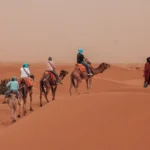
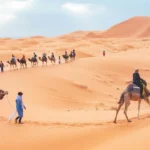
With a licensed local operator, very. The Merzouga desert circuit is a mature, well-run route — real roads, established camps, experienced drivers. The desert is our home; the only rule is don’t improvise it alone. Book with people who live there.
Still weighing it up? Write to us with your worries — we’d rather give you an honest answer than a sale. And when you land, the first glass of mint tea is on us.
— Happy Morocco Travel · Amazigh-owned tour operator in Rissani, gateway to the Sahara
Planning the desert leg? Our complete guide on how to visit the Sahara Desert in Morocco covers routes, driving times, camps and what to bring.
Still working this trip out?
We are a family who run tours out of Rissani, on the edge of Erg Chebbi. Ask us anything about what you have just read — dates, driving times, whether an itinerary is actually realistic. You will get a straight answer from us, not a sales call.