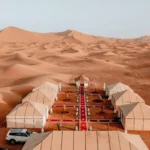


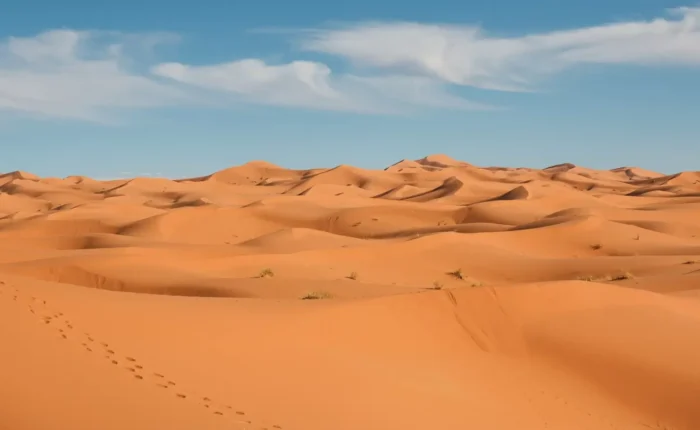
The Sahara is not empty. It looks it from a car window, but the Moroccan Sahara around Merzouga — where summers pass 45°C and rain barely comes — is home to foxes, wild cats, lizards, hedgehogs, scorpions and dozens of birds, almost all of them built to survive on very little water. Most are small, most are nocturnal, and most see you long before you see them.
We grew up in Rissani, at the edge of these dunes. Below are the animals of the Moroccan Sahara — which ones actually live here, and, honestly, which ones you have a real chance of seeing on a normal desert trip.
The dromedary camel
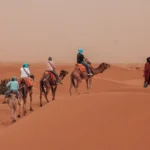
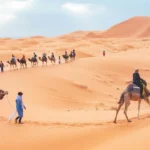
The animal you will absolutely see. Morocco’s camels are dromedaries — one hump, not two — and they are not wild; they belong to families like ours and have carried people and salt across this desert for over a thousand years. A camel closes its nostrils against blown sand, drinks 100+ litres in one go, and lives off the fat in that hump for days. The ones you ride at sunrise and sunset over Erg Chebbi know the dunes better than any map.
The fennec fox
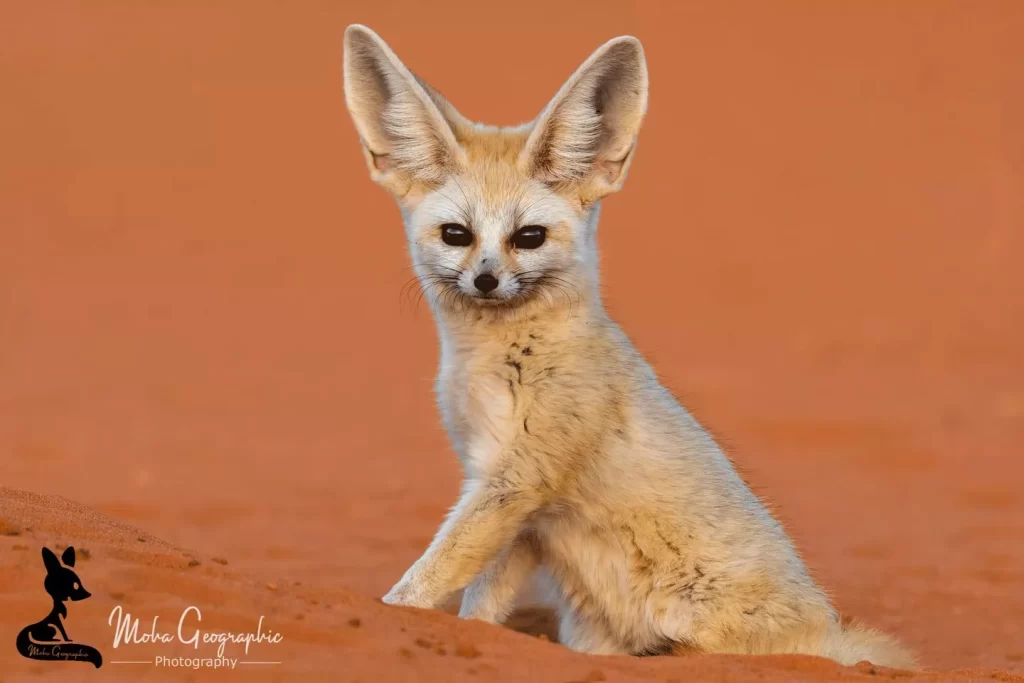
The little one with the enormous ears — the smallest fox in the world, and the animal most people hope to spot. Those ears dump body heat and pick up insects moving under the sand. Fennecs are nocturnal and shy, so daytime sightings are rare, but their tracks and burrows are all over the dunes at Erg Chebbi. If you see one, it will be at dusk, and you will be lucky.
The sand cat
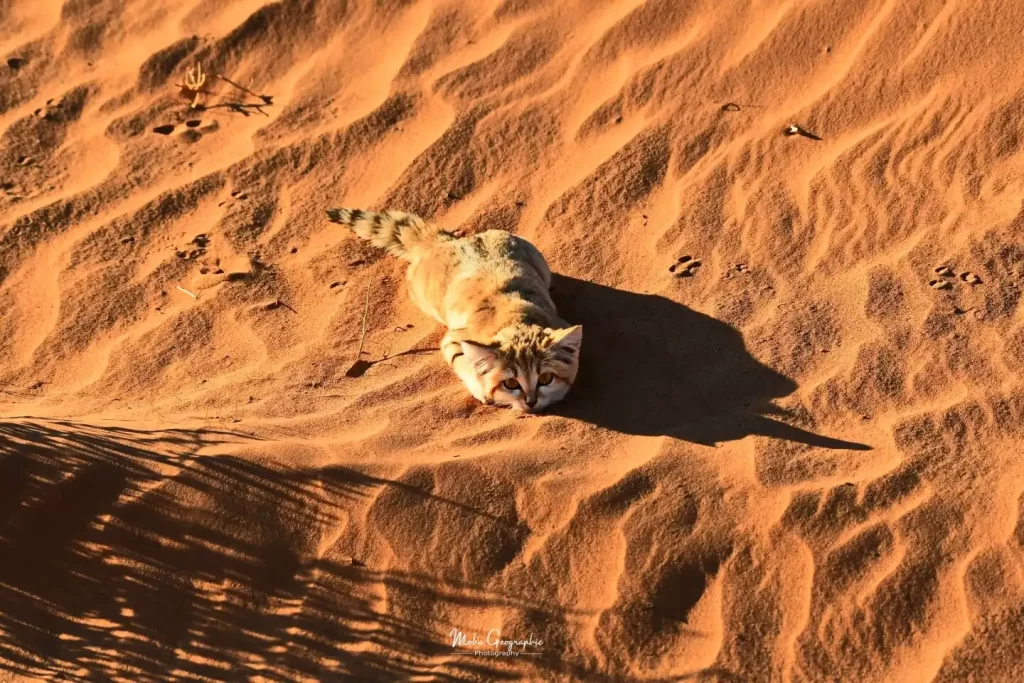
A small wild cat, sand-coloured, with fur on the soles of its feet to cross scorching ground. It survives without drinking — it takes water from its prey. Sand cats are so well camouflaged and so elusive that most desert guides go years without a clear sighting. Present in the Moroccan Sahara, yes; something you should expect to see, no. Be honest with yourself and enjoy the surprise if it comes.
The desert hedgehog
Smaller and paler than a European hedgehog, with bigger ears. It shelters from the heat by day and hunts insects and small scorpions by night. Harmless, occasionally seen crossing a track after dark near the auberges.
Lizards and the desert monitor
Lizards are the reptiles you are most likely to actually see — skinks and agamas darting between rocks in the morning sun. The largest is the desert monitor, which can reach over a metre and is a genuine thrill to come across. All of them bask early, then vanish into shade once the ground gets too hot to stand on.
Addax and gazelle — the honest note
Old guides talk about the addax, a pale desert antelope, and the dorcas gazelle roaming these sands. The truth: the addax is critically endangered and effectively gone from the wild here — you will only see it in protected reserves, not on a tourist route. We would rather tell you that than pretend. Gazelle survive in remote pockets but are very rarely seen.
Scorpions and beetles
The Sahara’s insects and arachnids are everywhere once you know to look. Scorpions — including the fat-tailed Androctonus — hide under stones by day; a good guide can show you one safely with a UV light at night, when they glow. Darkling beetles leave those neat trails across the dunes at dawn, and some tip forward to catch fog-water on their backs. Shake out your shoes in the morning; that is a real desert habit, not a tourist myth.
Birds of the desert
More birds live out here than people expect — desert larks and wheatears, sandgrouse that fly miles to water at dawn, and birds of prey riding the thermals. Around Merzouga a small seasonal lake (Dayet Srji) can fill after rain and briefly draw flamingos and waders, which surprises everyone. Mornings are when the desert is most alive with birdsong, before the heat shuts everything down.
Will I actually see any of them?
Realistically, on a normal trip you will see camels, beetles and their tracks, lizards in the morning, and birds — and if you are out at dawn or dusk with someone who knows where to look, maybe a fox. The cats, hedgehogs and monitors are there but shy. The desert rewards early risers and quiet people; the middle of the day, when most visitors are out, is exactly when the animals are hiding from the sun. Come in spring or autumn and spend a night in the sand, and your odds go up.
If you are planning the trip itself — how to reach the dunes, where you sleep and when to come — our guide on how to visit the Sahara Desert in Morocco walks through all of it.
Frequently asked questions
Are there dangerous animals in the Moroccan Sahara?
Scorpions and a few snakes are the only real concern, and both avoid people. Shake out shoes and bedding, do not put hands under rocks, and you are extremely unlikely to have any trouble. Large predators do not live here.
Will I see a fennec fox on a desert tour?
Possibly, but not guaranteed. Fennecs are nocturnal and shy. Your best chance is at dusk or after dark, away from lights, with a guide who knows their burrows near Erg Chebbi.
Are the camels wild?
No. Morocco’s dromedary camels are domesticated and belong to local families. They are working animals, cared for and used for treks across the dunes.
What is the best time of day to see desert wildlife?
Early morning and dusk. Most Saharan animals are nocturnal or crepuscular and hide from the midday heat, so the edges of the day are when the desert comes alive.
Are there really birds in the Sahara?
Yes — larks, wheatears, sandgrouse and birds of prey live here year-round, and a seasonal lake near Merzouga can draw flamingos and waders after rain. Mornings are best for birdsong.
Curious about a particular animal, or want to be out at the right hour to have a chance? Ask us — we live here, and we will tell you honestly what you can expect. First, you might like to read where the Sahara actually is and how to reach it.
Still working this trip out?
We are a family who run tours out of Rissani, on the edge of Erg Chebbi. Ask us anything about what you have just read — dates, driving times, whether an itinerary is actually realistic. You will get a straight answer from us, not a sales call.